Introduction
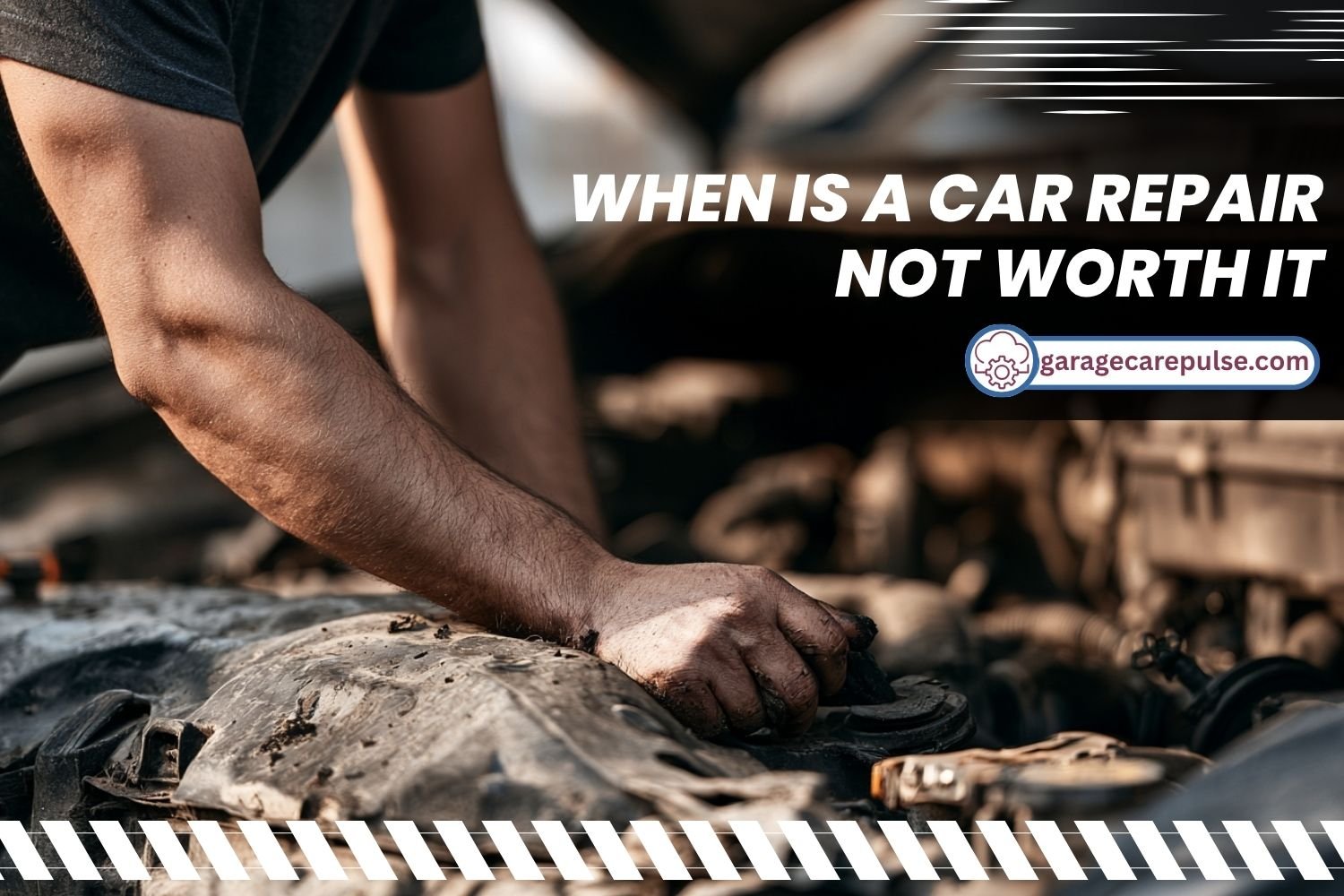
Knowing when is a car repair not worth it can help drivers avoid spending more on an aging vehicle than is financially sensible. A major repair estimate often raises an important question: should you fix the current car or put that money toward a replacement? One useful guideline is the 50% rule, which suggests reconsidering a repair when its cost exceeds half the vehicle’s current market value.
Minor repairs under $500 may be worthwhile, while expenses between $1,000 and $3,000 require a closer comparison of the car’s value and condition. Major engine or transmission repairs costing $4,000 to $10,000 or more can be difficult to justify on high-mileage vehicles. Comparing repair costs, reliability, and replacement expenses can help you make a more practical financial decision.
Symptoms and Financial Threshold Classifications
Classifying vehicle repair scenarios against market value thresholds helps determine whether fixing or replacing your car is the smart financial choice:
| Repair Cost vs. Car Value Ratio DOCX | Financial Rule of Thumb & Status DOCX | Recommended Action DOCX | Typical Cost Range (USD) DOCX |
| Repair Cost < 25% of Car Value | Minor routine repair (brakes, alternator, starter) on a solid vehicle | Fix it immediately; cheaper than car payments | Variable |
| Repair Cost 25% to 50% of Car Value | Moderate repair (suspension overhaul, timing belt, minor gasket leak) | Evaluate overall vehicle condition and remaining lifespan | Variable |
| Repair Cost > 50% of Car Value (The 50% Rule) | Major mechanical failure (engine replacement, transmission rebuild) on an aging car | Not worth it; trade in or sell for salvage | Variable |
| Continuous Cumulative Repair Bills | Experiencing multiple expensive failures month after month (death by a thousand cuts) | Stop repairing and replace vehicle entirely | Variable |
| Isolated Minor Fixes Check | Immediate check | $0 | $0 |
Selecting high-grade budgeting and planning habits ensures that your preparation for understanding when is a car repair not worth it withstands rigorous financial scrutiny across American vehicle ownership cycles.
Chemical Mechanics Based Modern Rubber Film and Tires
Modern radial tires and custom vehicle protection films installed on your car are engineered using sophisticated synthetic rubber compounds, polymer chains, and specialized additives designed to contain high-pressure air or shield exterior paint safely. When evaluating options related to when a car repair is not worth it, understanding how proper material construction supports chassis weight prevents excessive thermal breakdown during highway driving and long-distance travel.
The chemical stability of modern technical polymers also ensures that wet traction and impact resistance remain optimized throughout changing U.S. seasonal climates, maintaining vehicle security under load. Regular maintenance and proper cleaning maintain these chemical interactions, ensuring safe operational limits across all weather conditions.
Engine blocks, transmission components, and structural metal frames operate under precise physical and mechanical laws. Across the United States, daily commuting, wear and tear, and thermal cycles degrade vehicle reliability over time, making economic valuations and repair threshold analysis critical.
Professional auto mechanics and valuation tools utilize multi-point inspections, Kelley Blue Book (KBB) data, and Edmunds market evaluations to assess these compromised vehicle systems. Understanding these material and mechanical characteristics explains why professional shop inspections and objective financial rules are mandatory for avoiding financial losses on aging cars.
Common Factors That Influence the Fix-or-Replace Decision Explained
Several key economic and physical variables determine whether a car repair is worth the financial investment:
Current Market Resale Value (KBB / Edmunds): Checking what your exact car model sells for in current local market conditions provides a baseline for the 50% rule. Better alternatives generally provide online valuation checks to ensure you never spend more on a repair than the actual trade-off equity of the vehicle. For U.S. vehicle owners who want predictable budgeting, assessing current resale value is essential.
The ‘Replacement Car Payment’ Test: Comparing the cost of the repair against 6 to 12 months of new car loan payments; if repair is cheaper, fixing wins. Suspension layout, frame reinforcement, and accessory positioning were optimized to maximize structural integrity without sacrificing diagnostic inspection access.
| Cost Factor Category DOCX | Pricing Variable & Scope DOCX | Price Range Variation DOCX | Operational Impact DOCX |
| Current Market Resale Value | Checking KBB or Edmunds values based on mileage and condition | Varies by make/model | Provides a baseline for applying the 50% rule |
| Replacement Car Payment Test | Comparing repair cost against 6 to 12 months of new car loan payments | Varies by financing | Determines short-term financial savings |
| Overall Mechanical Condition | Evaluating rust, suspension rot, and oil leak history | Holistic vehicle check | Prevents sinking money into a rotting chassis |
| Multi-Point Shop Inspections | Assessing major mechanical systems during a single shop visit | Professional service fee | Spots looming secondary failures early |
| Sentimental vs. Economic Value | Accounting for personal history versus pure market economics | Subjective factor | Influences non-traditional repair decisions |
Financial Impact: One-Time Major Fixes vs. Chronic Unreliability
Comparing average U.S. vehicle market values and major repair thresholds highlights financial decision-making guidelines when calculating expenses associated with when is a car repair not worth it. Custom-fit financial and vehicle choices usually provide a clearer budgeting picture, superior component predictability, and fewer unexpected expenses compared to generic averages.
When evaluating when is a car repair not worth it, checking factors like low-value beater cars ($2,000 market value) versus late-model reliable cars ($15,000+ market value) ensures total financial awareness. Furthermore, choosing to walk away from chronically unreliable vehicles protects vehicle owners’ budgets from the sunk cost fallacy.
| Cost-Saving Method DOCX | Actionable Description DOCX | Estimated Monthly Impact DOCX | Operational Impact DOCX |
| Applying the 50% Rule | Avoid repairs exceeding half of your car’s market value. | Prevents massive financial losses on aging vehicles. | Objective financial protection |
| Multi-Point Inspections | Inspect all major mechanical systems during a single shop visit. | Identifies looming secondary failures before committing funds. | Comprehensive health assessment |
| Market Value Appraisals | Check real-time vehicle values using KBB or Edmunds | Establishes precise repair limits | Prevents overspending on repairs |
| Meticulous Record Keeping | Keep physical or digital copies of all repair quotes and valuation logs | Protects vehicle resale value and proves maintenance history | Financial equity preservation |
Simple Step-by-Step Installation Rules
Professional automotive service or supervising shop repairs requires following strict evaluation procedures and financial standards when exploring when is a car repair not worth it guidelines:
Get an Accurate Repair Estimate: Obtain a written, itemized quote detailing exact parts and labor costs for the required repair to support your understanding of when is a car repair not worth it.
Curing and Drying Times: Allow any diagnostic checks or temporary fixes to settle completely before evaluating long-term vehicle viability.
Always Determine Your Car’s Market Value: Check online valuation tools (KBB, Edmunds) to find what your car is worth in its current condition.
Utilize the 50% Rule Framework: If the repair cost exceeds 50% of the car’s market value, strongly consider putting that money toward a replacement vehicle.
Save All Service Invoices and Valuation Documents: Save your repair estimates, KBB printouts, and itemized shop invoices in a dedicated binder or digital logbook to maintain comprehensive service records, protect warranty validity, and maximize future vehicle resale value.
Maintenance and Care Tips
Financial planning frequency and repair monitoring depend on driving conditions, geographic climate, and exposure to driving stress. Keep repair invoices, warranty information, and service schedules for future reference. Inspect periodic maintenance milestones and independent shop pricing schedules on a regular schedule to maintain financial awareness. Evaluate vehicle wear patterns before committing to major high-mileage overhauls.
Building consistent habits around your automobile transforms financial decision-making from an overwhelming burden into an effortless routine. Assess whether a repair is an isolated incident on an otherwise reliable car or part of an ongoing chain of expensive breakdowns.
When facing steep mechanic bills, remember to factor in replacement taxes and fees, as buying a replacement car incurs sales tax, registration fees, and potential dealer markups that can make keeping your current car cheaper. Additionally, never fall for the sunk cost fallacy by continuing to pay for expensive repairs simply because you already spent money fixing the car recently.
Regional U.S. Climate Considerations for When Is a Car Repair Not Worth It
Geographic location across the United States introduces unique economic and environmental stressors that alter what is required for proper when is a car repair not worth it evaluations: when regional used car prices are high, repairing an older vehicle is often significantly cheaper than purchasing an overpriced replacement car, while vehicles in northern winter states suffering from severe frame and suspension rust make major mechanical repairs a poor investment due to structural fatigue.
Balancing where and how you service your vehicle is one of the most effective ways to lower your annual cost of ownership in the USA. Budget products can meet basic short-term needs, but premium preventative care items often prevent catastrophic failures and provide better overall value through improved reliability and stronger warranties. Balancing initial repair costs against expected lifespan helps you maximize the long-term utility of your vehicle investments.
Adhering to a strict preventive maintenance schedule minimizes environmental climate stress across all regional driving conditions.
| U.S. Driving Region / Condition DOCX | Environmental Stress Factor DOCX | Fix-or-Replace Adaptation Strategy DOCX | Typical Regional Impact DOCX |
| High Regional Used Car Prices | Inflated local used car market valuations | Repair older vehicles when repair costs are lower than inflated replacement prices | Preserves short-term household cash flow |
| Rust Belt Structural Degradation | Severe frame and suspension rust in northern winter states | Avoid major mechanical repairs on structurally rusted chassis | Prevents investing in unsafe vehicles |
| Preventative Multi-Point Checks | Regular mechanic inspections to evaluate long-term viability | Lower long-term financial risk ($150–$500 maintenance intervals) | Catches looming failures early |
| High-Speed Highway Commuting | Long-distance travel testing powertrain durability | Evaluate vehicle age and mileage before approving major overhauls | Guides reliable replacement timing |
| Urban Congestion Zones | Stop-and-go traffic loads transmissions and brakes | Monitor transmission and brake health routinely | Avoids sudden urban breakdown expenses |
Potential Drawbacks and Consideration Factors
Certain contract terms, such as strict warranty compliance clauses or specialized electronic diagnostic requirements, add substantial financial risk if not reviewed carefully. Premium dealership service networks carry higher hourly labor rates compared to independent pay-as-you-go alternatives. Finding available appointment flexibility can also require advance scheduling during peak seasonal rush times. Additionally, deferring minor maintenance items can cause compounding mechanical failures that multiply future repair bills.
Common Misunderstandings About Automotive Add-Ons
A frequent misconception when evaluating when is a car repair not worth it is that the sunk cost fallacy applies to reliable maintenance, whereas thinking ‘I already spent $2,000 on repairs last month, so I have to fix this $3,000 problem this month’ is a financial trap, because past spending should never dictate future investment.
Another myth is that car repair costs are the only expense when replacing a car, whereas buyers often forget to factor in replacement taxes, registration fees, and potential dealer markups that make keeping a running car cheaper. Understanding these distinctions clarifies why technical accuracy and selecting objective financial rules bridge the gap between emotional mistakes and sound transportation budgeting.
Frequently Asked Questions
- When is a car repair not worth it?
A car repair is not worth it when the repair cost exceeds 50% of the vehicle’s current market resale value, or when ongoing chronic breakdowns make the car permanently unreliable. - What is the 50% rule in car repairs?
The 50% rule states that if a repair bill exceeds half of what your car is currently worth on the open market, you should put that money toward a replacement car instead. - How do I find out my car’s current market value?
You can check online vehicle valuation platforms such as Kelley Blue Book (KBB) or Edmunds by entering your car’s exact year, make, model, mileage, and condition. - Is it better to fix an old car or buy a new car payment?
If a one-time repair is cheaper than 6 to 12 months of new car payments and the car remains reliable afterwards, fixing it is usually the more economical choice. - What is the sunk cost fallacy in car repairs?
The sunk cost fallacy occurs when you continue paying for expensive repairs simply because you already spent money fixing the car recently, ignoring whether the car will actually become reliable. - Do insurance companies use a similar formula for totaled cars?
Yes, insurance companies declare a car a total loss when repair costs exceed 70% to 80% of the vehicle’s actual cash value (ACV). - Can a mechanic help me decide if a repair is worth it?
Yes, reputable independent mechanics can provide multi-point inspection reports detailing upcoming maintenance needs, helping you evaluate whether your car has long-term viability. - When do you pay for car repair services?
In standard practice across U.S. auto shops, you review and approve the written estimate beforehand and pay your final balance after work is fully completed, right before vehicle pickup.
Final Takeaway
Ultimately, understanding when is a car repair not worth it helps you make smarter financial decisions while keeping your vehicle safe and reliable. Compare repair costs with your car’s current market value, apply the 50% rule, and consider its overall condition before committing to expensive repairs. Review your service history, prioritize essential safety and preventive maintenance, and postpone unnecessary cosmetic upgrades. Always address warning signs promptly, consult a qualified mechanic, and maintain accurate service records. By following a practical car care strategy and evaluating repair expenses carefully, you can protect your budget, extend your vehicle’s lifespan, and enjoy safer, more dependable driving year-round.